
Kā Kurakura o Hinenuitepō: A Night Under the Southern Lights
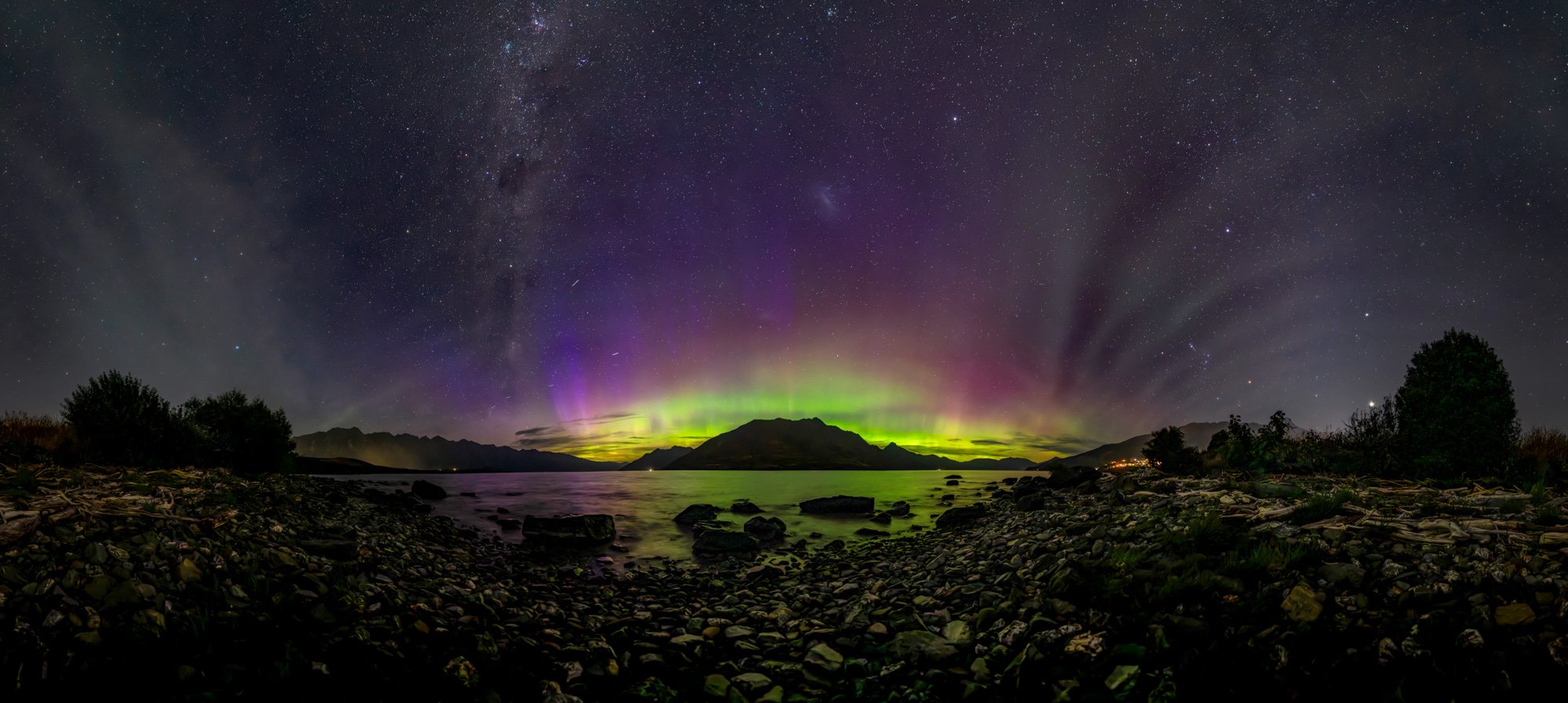
Brilliant green and magenta aurora australis with dramatic vertical beams stretching across the night sky above Whakatipu Wai Māori, Kawarau & Kā Kamu-a-Hakitekura ranges, with stars visible through the auroral display
At this point, I'm finding it difficult to know where to begin.
For most folk, it usually begins with the hype, so let's start there. Right from the off here, can we please note that not often does the hype turn into a positive experience. That's the thing with hype - it's rooted in desires, hopes and dreams, certainly not actuals. What we really want to happen, regardless of how likely it is to happen.
There is no greater hype machine around these parts than a staggering Aurora prediction. Ok, maybe incoming snow, or a hot sunny day this raumati (summer). We're all partial to being sucked into an aurora prediction, and alas, many of us have spent hours outside at night watching the Southern horizon, patiently waiting for it to appear.
The prediction is complex. There are many factors involved and it always grates me to say it, but you'll know there's an aurora when you're looking at it - or an image of one on the back of your camera. Having a bit of an understanding of the science behind it all often makes you feel like a total buzz kill.
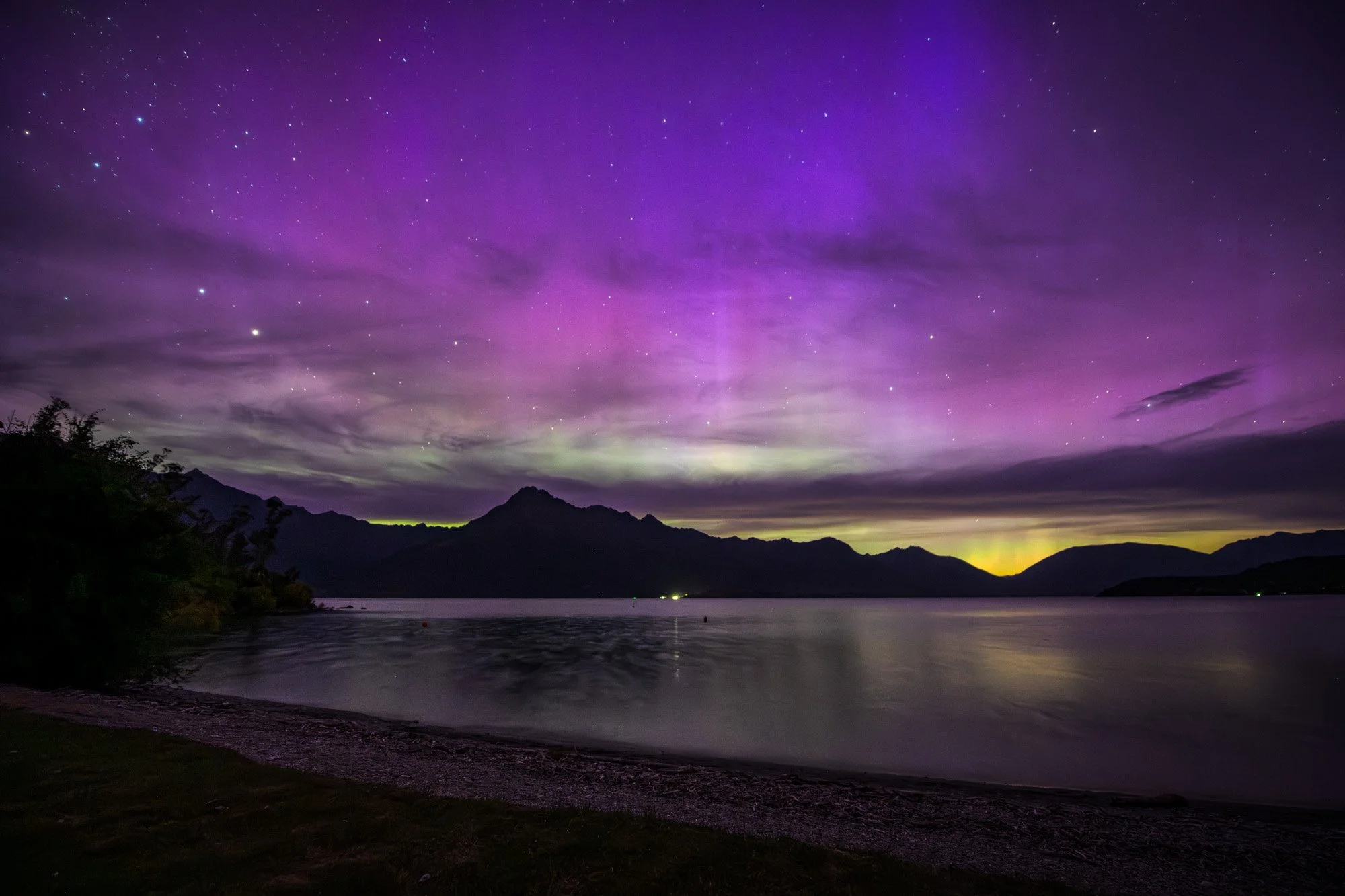
The beginnings of the show, just after sunset. Faint white beams extending up from behind the maunga on the opposite side of Whakatipu Wai Māori—the moment when you know it's truly happening.
The Hype Builds
Sometime during Tuesday morning, the hype started showing up. Then it really started to amplify. Doing what I do, I checked in with my favourite app that isn't an app - Glendale. If you've not heard or experienced the incredible work of Andy Stables from the Isle of Skye in the UK, then it's really worth checking him and his incredible coding skills out.
There are satellites that sit between Tamanuiterā (the Sun) and Papatūānuku (the Earth) and they monitor the solar wind—the stream of particles that are given off by the Sun, which radiate outwards. The data from these satellites is transmitted at the speed of light, so it arrives at Earth pretty quickly. The speed of the particles however, is much, much slower. If we can interpret this data correctly, we get a bit of a heads up that an Aurora should be visible - given of course it's night time, not so many if any clouds, and the light from te Marama (the Moon) isn't so bright as to wash it out.
There are two main things I look for initially: the Bz and Bt. My understanding of this is that the Bz is the On/Off switch and the Bt is essentially the strength of the incoming particles.
“You’ll know there’s an aurora when you’re looking at it - or an image of one on the back of your camera.”
The Bz measures the directional element of the Interplanetary Magnetic Field. If the Bz is greater than 0, then the particles in the solar wind will be directed away from the Earth's magnetic field - so no Aurora. If it's negative, then these particles are pulled into the magnetic field of our planet and start to interact with the particles in our atmosphere. This interaction is what then emits photons at different frequencies. Depending upon which particles interact with different parts of the atmosphere, different frequencies of photons are emitted. We observe the different frequencies of photons as different colours.
The actual value of the Bz will determine just how much pull or push will be given to these incoming particles. Usually I get reassured if I'm seeing Bz -2nT or less. nT is a nano Tesla, the unit used to measure the strength of a magnetic field—thankfully nothing whatsoever to do with Elon Musk.
The Bt is the measure of the density of the solar wind. I think of it as the oomph - if we can keep things as simple as possible it usually makes everything so much easier for everyone to understand. Again, if I see Bt 10nT alongside a Bz of less than -2nT, I'm looking towards Toka (South).
Rather stupidly I didn't screen grab what I saw. Bt of around 60 and a Bz in the 50's. There was the kicker. A positive Bz. By the jeepers, this is one heck of a solar storm that's beating down on our atmosphere, yet our protective magnetic fields are doing just that—protecting us against the onslaught of magnetic fields. Not so much here in Aotearoa, but if you look towards more densely populated regions of the planet, their massive electricity infrastructure is affected enormously by strong solar wind.
The Clouds
Now we find ourselves at the most frustrating part of the Kiwi summer of 2025/2026. The clouds. It's still too soon to talk about this in any great depth. But as with pretty much every day this summer, we've been looking to the heavens to see white, grey or dark blue instead of a beautiful bright baby blue. Tuesday wasn't much different. There was however hope, just like the hope that the Bz will miraculously switch on.
As Tamanuiterā was around 40° above the horizon, as I was feeding the goats, I looked at the sky. Beautiful cirrus clouds, especially surrounding the Sun. As part of my studies of kā taka o te marama (The Māori lunar calendar) I've come to trust that if I can see a Sun Halo, once the sky gets dark it will be blissfully clear. Alas, there was no halo, even when I pointed my camera in that direction.
With a tour booked, as we approached hot chocolate making time, even though it wasn't going to be perfectly clear, I knew that we had a good chance of seeing ka whetu (the stars). Te Marama is in one of my most favourite of phases - Tirea, a thin sliver of a marama, the second day of the lunar month. If you're really lucky, you'll glimpse Tirea around 20° above the horizon, just after Tamanuiterā has ventured below.
Couple this with a fresh look at Glendale to show me that yes, the Bz is now negative, and whilst nowhere near as strong, we're in the 20's and 30's. Jeepers.
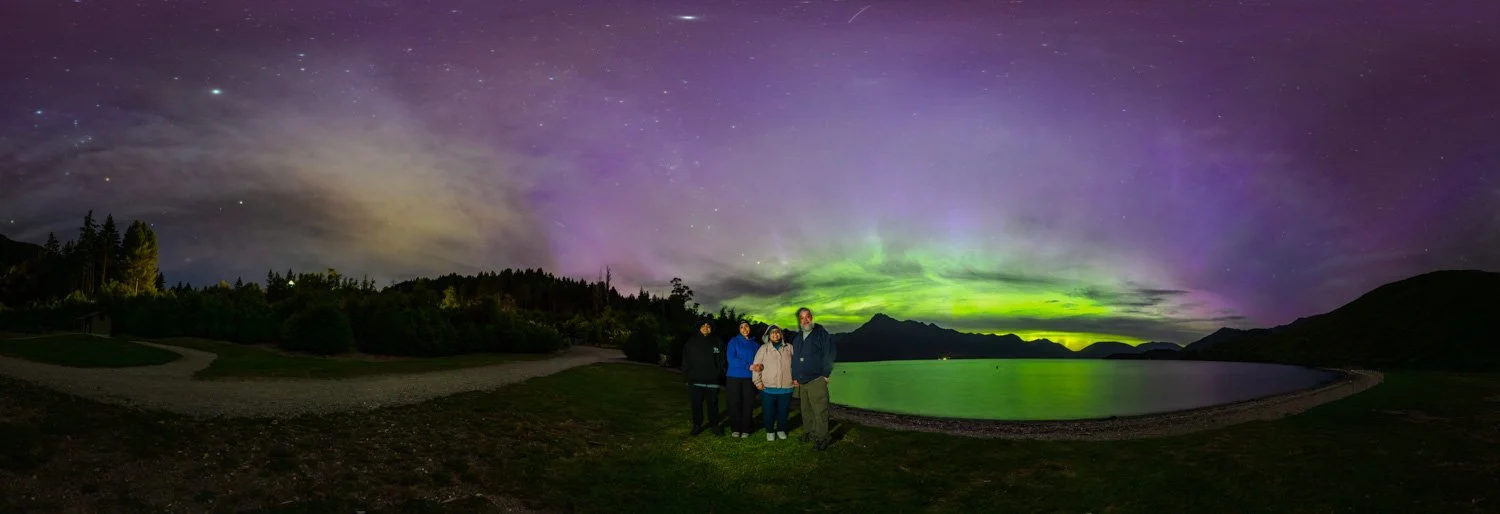
A popular viewing spot near Queenstown, where with the right skills and technical know-how a beautiful family portrait under Kā Kurakura o Hinenuitepo can be created. Some light editing to remove localized light distractions - we make the most of a place and tidy up images so the focus stays where it should be: on the experience and the sky. The green and magenta light dancing above the mountains made this an unforgettable evening for our manuhiri.
The Show Begins
Our manuhiri for this evening needed to be able to view from a site close to where we park. This brought a couple of challenges, but nothing that we couldn't work with. As expected, it was reasonably busy lakeside, yet we managed to be pretty much left alone in our immediate surrounds.
Just as I was setting up the telescope, I could see faint white beams extending up from behind the beautiful maunga (mountains) on the opposite side of Whakatipu Wai Māori. And there it truly began.
The clouds added to the overall feel and mood of what we could see. Initially the sky had the most beautiful magenta tinge to it, with white beams breaking through. Incredibly beautiful cirrus clouds sitting above the maunga gave slow moving patterns to this light. The magenta is a result of the particles interacting with the oxygen that sits above around 120km up in the atmosphere.
The green, which was just becoming visible through the valleys and saddles, is the result of the interaction of the solar wind with the oxygen below 120km. The stronger the Aurora, the higher into the atmosphere the magenta and green will stretch.
Between the cloud and the light from the aurora, kā whetū were visible, but pretty tough to observe using the Unistellar eVscope. The algorithm was getting a tad confused by all the different colours passing through.
Instead, we shot some beautiful portraits, set the camera to sit by the shore to capture a timelapse, and I walked our manuhiri through the ins and outs of auroral activity as well as the basics of astronomy, both from a Western Science and mātauranga perspective.
As time went by, the clouds drifted through, but more importantly, the strength of the aurora grew. With our naked eyes we could witness pulses of green light extending towards the Zenith (the point directly overhead). The magenta extended to around 30° above the northern horizon, so in actual fact, due to where we were, there was the thinnest sliver of night sky visible that wasn't bathed in auroral light. How good is that? There were even glimpses of blue - this is much more rare than the green and magenta and is the light given off by Nitrogen in the atmosphere.
All good things do have to come to an end, yet when the show is as good as this, the end just keeps getting pushed back, little by little. Just as the bags were almost packed, a Corona appeared. The Corona is what you see when the Aurora converges above your head - it's like its crown. When you're close to the poles, a reasonably frequently seen phenomena. At 45° South, not so. This is the third I've ever seen.
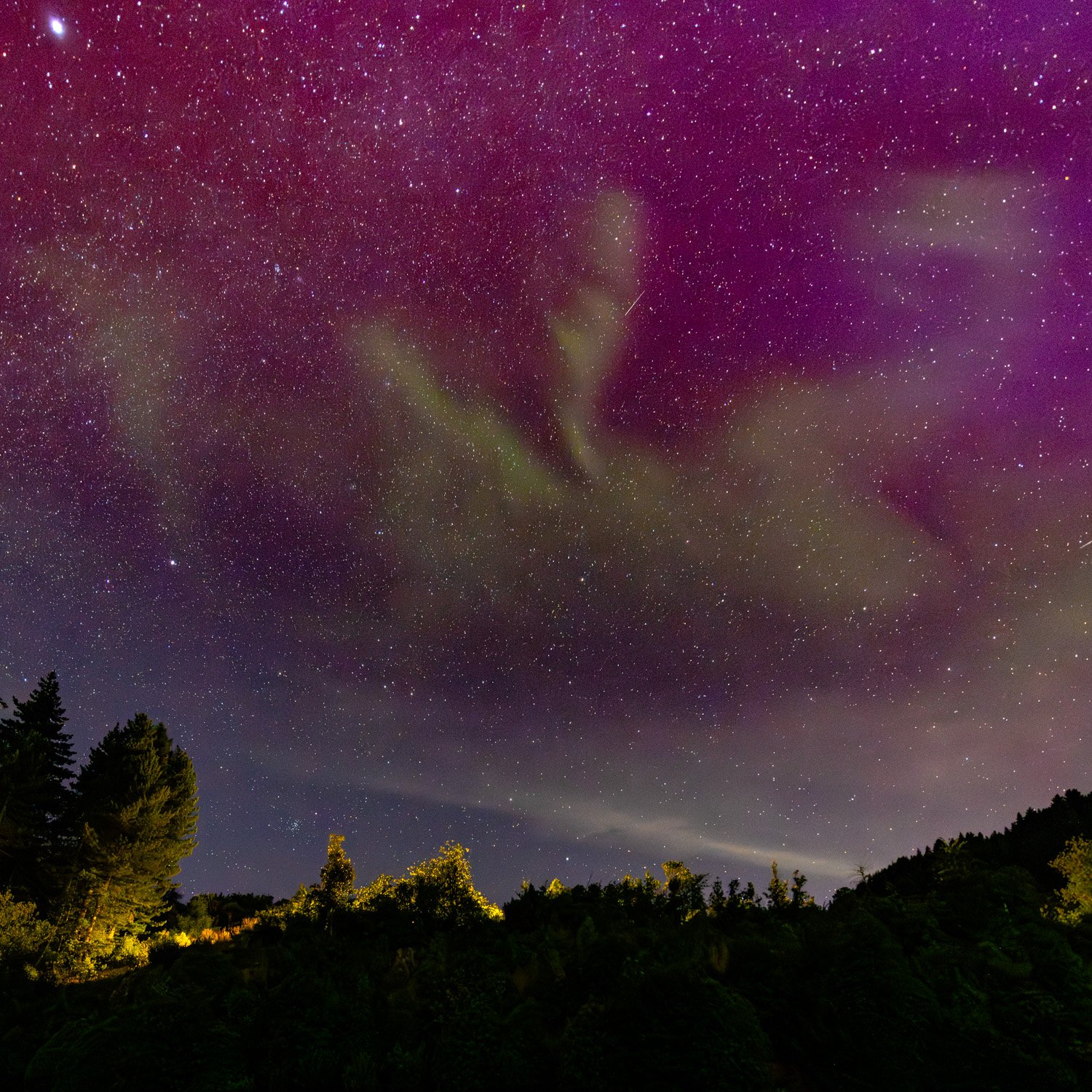
The Corona appeared at Closeburn - when the aurora converges directly overhead like a crown. The third I've ever seen at 45° South. Even out here in the darkness, that single street light becomes a beacon, pulling your eye away from the sky. It's not insanely bright by city standards, but in the middle of proper dark, it's a distraction we simply don't need.
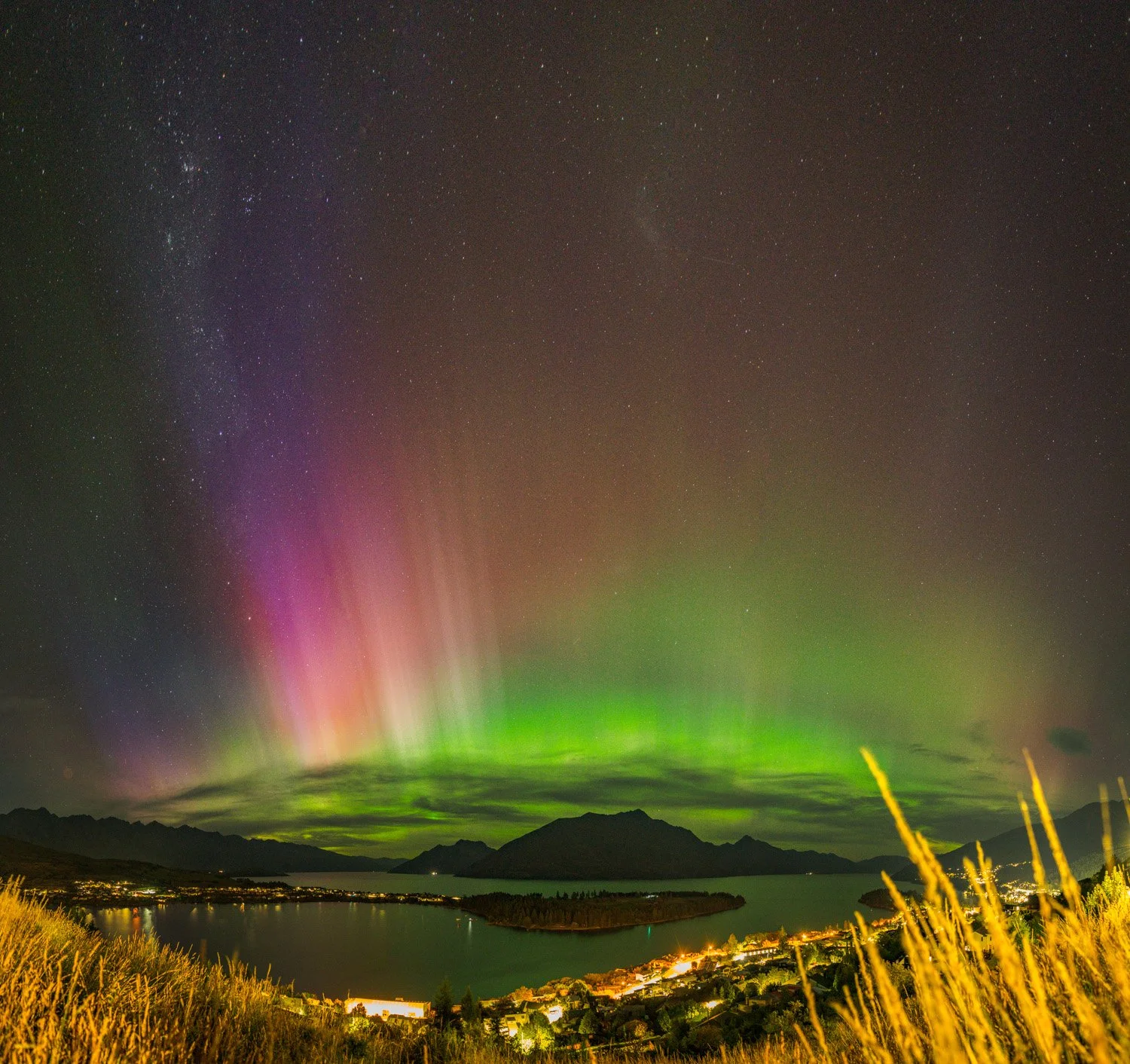
The view from Hensman Road lookout - billion dollar views over Whakatipu Wai Māori, compromised by one of the brightest and most pointless street lights I've encountered. The aurora itself is still visible, green and magenta dancing above the lake, but that orange glow cast across the grasses is ridiculously distracting. Your eye can't help but be pulled down instead of up. In photographs it's even worse - the camera captures what our eyes try to filter out.
Light Pollution: A Growing Concern
At this point, I was reminded of the almost countless number of incredibly badly designed lights that exist, which helped form the next part of my mission.
In late 2024 I attended the Starlight conference in Takapō. A bringing together of astronomers, astro tourism business owners and guides as well as many more people than I ever expected from the lighting industry. We all know that increased artificial light at night (known as ALAN in the industry) ensures safety for all at night. As I found out during this conference, this statement is about as far from the truth as humanly possible, and actually it's the converse that's true. Bright stark lights do in fact make our dark places less safe. Well designed directed light does help in terms of safety, but apparently that hasn't quite registered with those that make the planning decisions.
The frustration of this led me into the next part of my night.
With our manuhiri dropped off, I thought I'd visit a couple of places around Tāhuna / Queenstown which should be amazing places to view ka kurakura o Hinenuitepo.
First up, the lookout where Hensman Road meets Edinburgh Drive. A reasonably large gravel car park / layby with billion dollar views over Whakatipu Wai Māori—also home to one of the brightest and most pointless street lights I've ever seen. It competes with a stadium light when you're standing under it at night. The orange glow casts a harsh sheen of light over everything in the not so immediate vicinity.
The car park was busy, which absolutely warmed me through and through. So many manuhiri out enjoying one of nature's most spectacular sights. Easy to access and safe (even if the light was turned off). Don't get me wrong, I do appreciate that we need some lights, but when you stand up here you can see just how much wasted bright light there is. The white plastic covering of a hotel being refurbished, reflecting thousands of lumens of light that benefits no one. Kelvin Heights Golf Course, Walter Peak Station and Halfway Bay, lit incredibly—for what actual purpose? Do we really need to see them from 5 to 10km away?
“Just because it’s better than somewhere else doesn’t mean we shouldn’t strive to make it as great as it could be.”
As amazing as it was to enjoy the energy of our manuhiri, I really couldn't stay here too long. Next stop, the beach at Frankton. Pretty much as I expected, a really yuck orange glow is cast over the surroundings. Yet between the bright cast light, we get dense dark shadows behind trees. As our eyes adjust to the ambient light it means that we can't see anything that lies in the shadows. If we use directional lighting, even better if it's on a timer and the intensity isn't so high, our eyes adjust accordingly, there are fewer shadows and ultimately we can see more.
Even with all of this ambient light around, the view to the heavens is amazing. From the end of the wharf you have an incredible view to Toka (South), Whitika (East) and Tomokaka (West). Honestly, this whole bay should be a stargazers' paradise, an absolute drawcard for localised tourism. For sure, our manuhiri from densely populated cities will be overjoyed. However, just because it's better than somewhere else doesn't mean we shouldn't strive to make it as great as it could be.
The new marina is pretty cool. I'm sure at some point there will be more than a handful of boats that use it, but again, do there really need to be high intensity halogen lights all the way around it reflecting off the water? I can't help but think how much cooler it would be if the lights were under the water—the water would glow rather than reflect harsh light upwards.
From here I could see that the clouds appeared to have thinned out somewhat and the show was still going on. Not as strong as it was previously, and with that there appeared to be more structure to it. The green was dancing closer to the horizon, the vertical beams a little more apparent. This however was not the place to enjoy this spectacle to its full advantage.
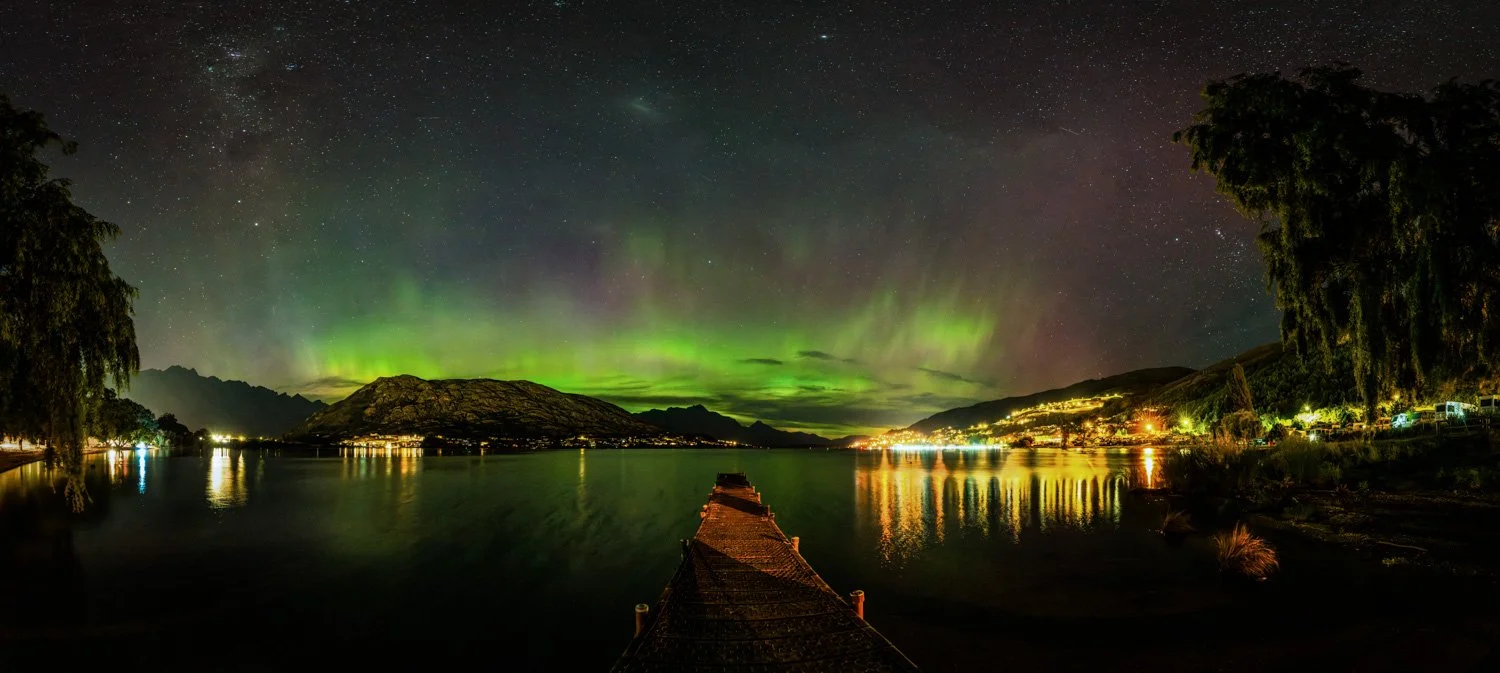
The rickety pier at Frankton. The sky itself feels darker here, the aurora still dancing above the mountains, but the light trespass is extraordinary. The lights do their job - illuminating the marina & roads - but they're also spilling everywhere else. Orange glow washing across the water, the surroundings, creating harsh shadows and stealing contrast from the night sky. Well-designed directional lighting could achieve safety without sacrificing the view. This whole bay should be a stargazer's paradise, an absolute drawcard for tourism. The potential is here, but we're lighting it away.
Te Nuku-o-Hakitekura
Te Nuku-o-Hakitekura - the Kelvin Heights Peninsula—seemed like the perfect place. Reasonably close, because yes it's now 3am in the morning, and with not so much effort you can hide behind some trees on the rocky shore to shield yourself from stray light.
As you wander around the Kelvin Heights Trail, it's not long before you encounter Whakatipu Kiukiu - the most beautiful sculpture created by local artist Mark Hill. The matriarch of the Whakatipu stands facing Kā kamu-a-Hakitekura, her hair lifted by Tawhirimatea (the wind) as she gazes across this incredible expanse of water.
I've always had this feeling about capturing her with ka kurakura o Hinenuitepo in the background and this was well and truly my chance. Little did I know I was about to be ambushed. Not by the wind, possums or rabbits, but by an incredibly powerful irrigation system of the golf course. I did wonder why the ground was so wet.
After a chuckle to myself, I managed to keep myself and my camera dry for long enough to shoot a few frames.
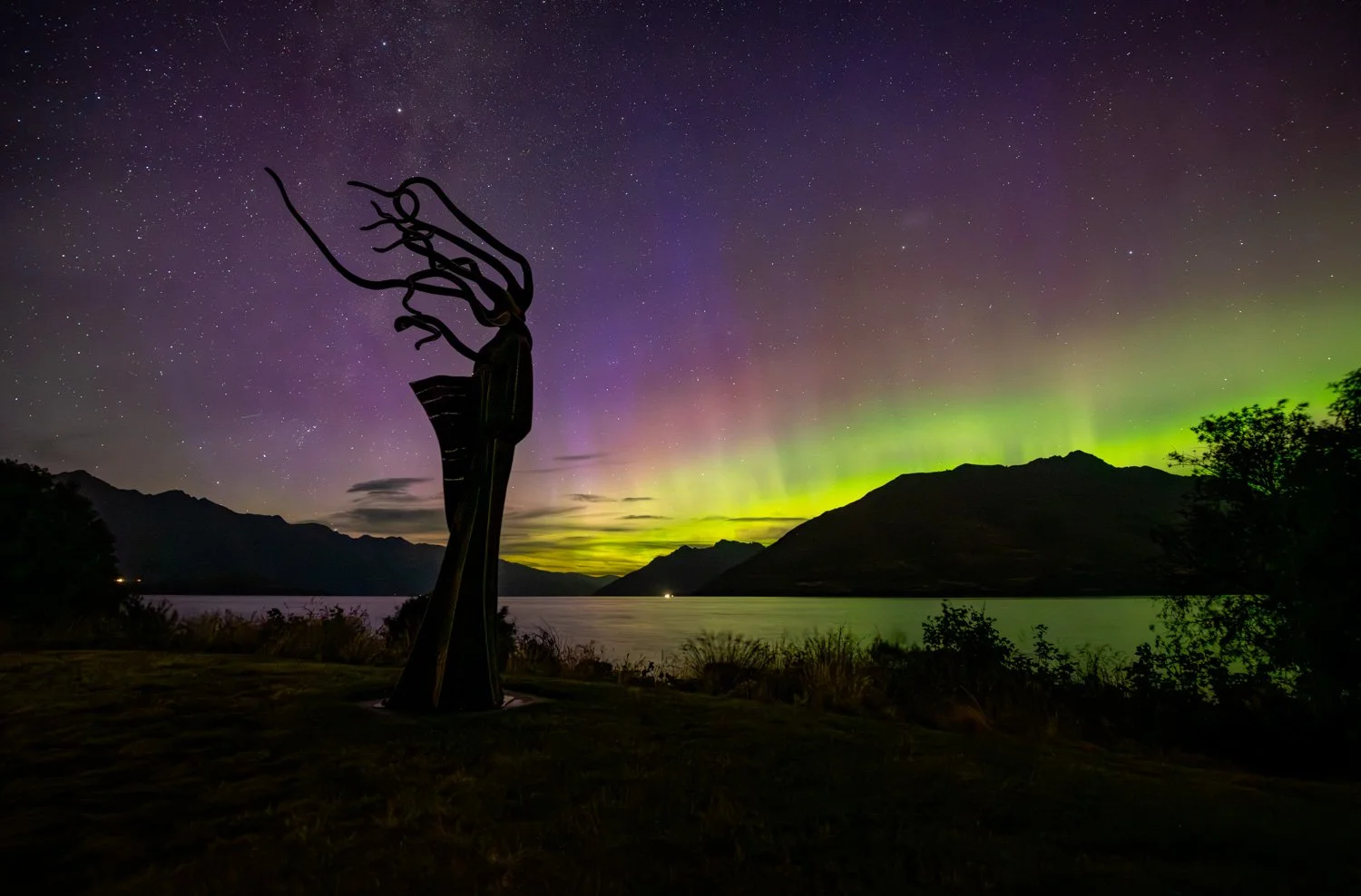
Whakatipu Kiukiu - the matriarch of the Whakatipu created by local artist Mark Hill. She stands on Te Nuku-o-Hakitekura (Kelvin Heights Peninsula) facing Kā kamu-a-Hakitekura, her hair lifted by Tawhirimatea as she gazes across this incredible expanse of water. I've always wanted to capture her with Kā Kurakura o Hinenuitepo in the background. Just had to dodge the golf course irrigation system to make it happen.
Conversation with Rehua
Then it was time. Finally. I got to sit, with myself and the Universe. As I walked across the beach, I looked to Kawarau (The Remarkables), and low and behold, Te Matau o Māui (Scorpius) was lying across the ridge line. Well almost, the beginnings of at least. I could easily see Uruao (the first waka navigated by Rakaihautu to land on Te Wai Pounamu as well as the waka Tanemahuta sailed to take the children of the light from Papatuanuku to Rakinui). This signalled one thing - my old friend Rehua was about to visit.
Some say Rehua is the first born of Raki and Papa. Most know him as the undisputed king of the night sky and the ancestor of love, kindness and well being. Husband of Matariki, father to their children, the whetu that make up the rest of the Matariki cluster, enabling tohunga to predict what the year will bring as they embark upon their heliacal rising from late May to early July. He resides in the 12th heaven, which means he knows everything about everything.
Ever since I first started my astrophotography journey well over a decade ago, Rehua has been my guiding light. We've had countless conversations. He's been by my side in the middle of the night, helping me work through deep grief, to sharing in my joy of many successes. For three months of the year his presence is only felt during the day time, and right about now he's just making himself known during the night time.
Different tau / marama / months of kā taka o te marama are named after whetu / stars, that appear on the horizon just before the sun rises. Te Waru o Rehua is the name of the eighth lunar month, named from the heliacal rising of Rehua. He came just before Christmas. This current lunar month is named after another of his wives, Rūhīteraki. Rūhīteraki sits next to Rehua when we see him rise, to his right, or to us the left. It's said that in this tau (month) she will bring the ripening of the fruits. Indeed, only in the last day or so have our plums started to turn from green to red. Alas the ground hasn't warmed as much as previous years due to the distinct lack of hours upon hours of sunshine so far this raumati.
“You get lost under a dark night sky such as this. Time drifts. Knowledge from ancient times comes through.”
With the camera positioned to capture their rising, I sat on a piece of driftwood and took stock of not only this night and the show, but also the year that has passed. We are fast approaching Rākaunui (full moon), which will bring in the New Chinese Year. We're currently in the last few days of the year of the snake and about to enter the year of the horse. The snake saw us shed all that didn't serve us well.
Rehua himself was the most beautiful orange he can ever be. A slight twinkle to him, influenced by the warm air radiating from the sun heated ridge of Kawarau. Rūhīteraki to his side - she wasn't quite as bright as I've seen her in the past and as they rose together she was there and she wasn't there. As I reflect and converse, this only confirms to me that the ripening of the fruits this year is stalled and troubled. There and not there. A demonstration of how we need to protect te taiao (our environment). Changes can have devastating effects to agriculture. They often start slow, but as years pass the differences accelerate and the systems we rely upon to feed ourselves are more vulnerable and fragile than we would like to believe.
The proton beams shot up. The green danced around. The cirrus clouds seemed to be forming the most beautiful arcs through the northern part of the sky, yet above me, where I sat, was the clearest it's been all evening. Pātara, the Magellanic Clouds, easily visible to the naked eye, stood proud, holders of vast amounts of knowledge from the beginning of time.
Gawarrgay, the Gamilaraay name of the Celestial Emu, has flown almost high enough to be perched atop of Kawarau. The Coalsack Nebula is prominent high in the sky. Mahutoka (The Southern Cross), a key constellation in terms of celestial navigation and national identity to Aotearoa, Australia and many other islands within Te Moana nui a Kiwa (The Pacific Ocean) looked the most beautiful I've seen in such a long time.
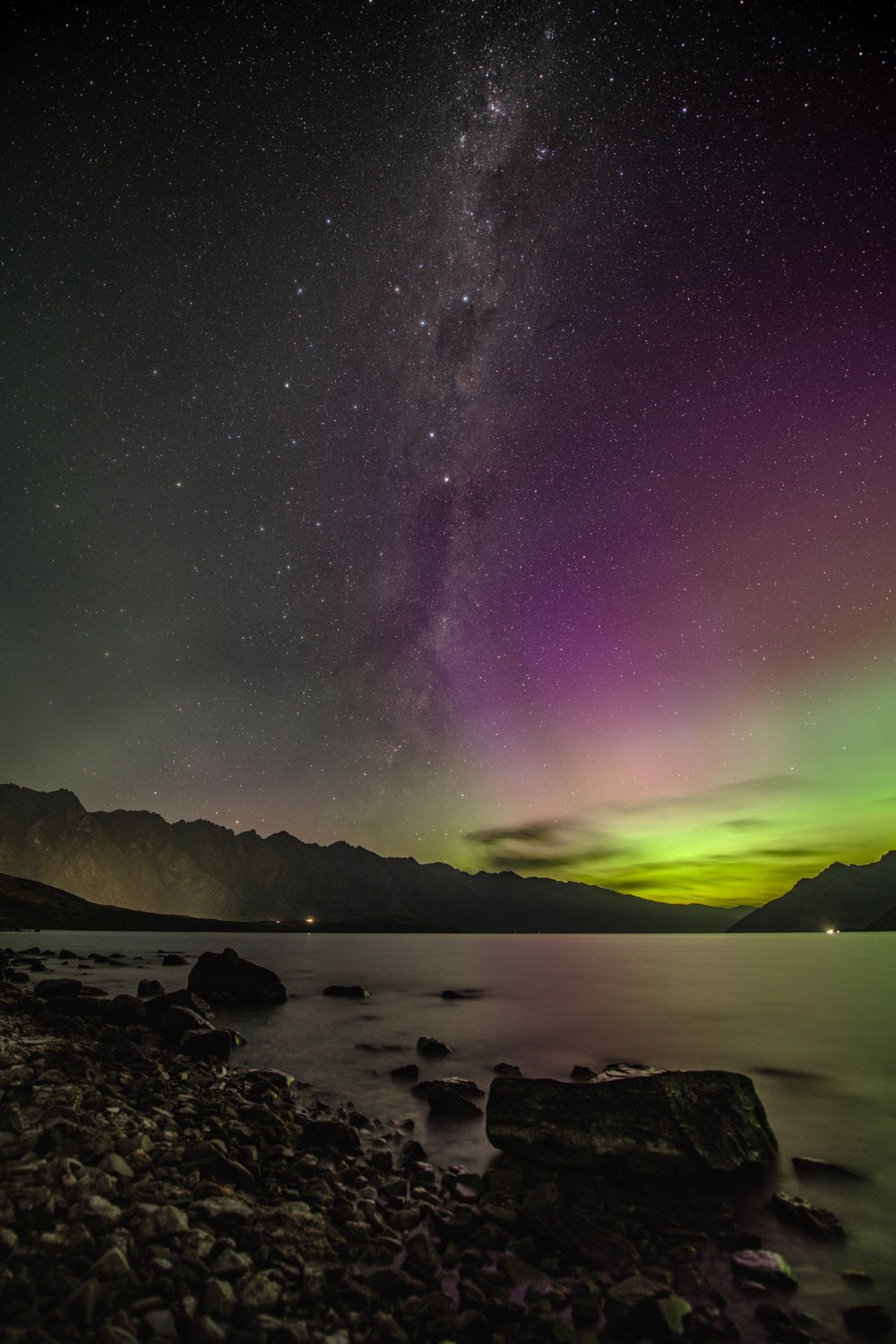
The clearest the sky had been all evening. Gawarrgay has flown almost high enough to be standing atop of Kawarau. Pātara, the Magellanic Clouds, easily visible to the naked eye, stood proud—holders of vast amounts of knowledge from the beginning of time. You get lost under a dark night sky such as this.
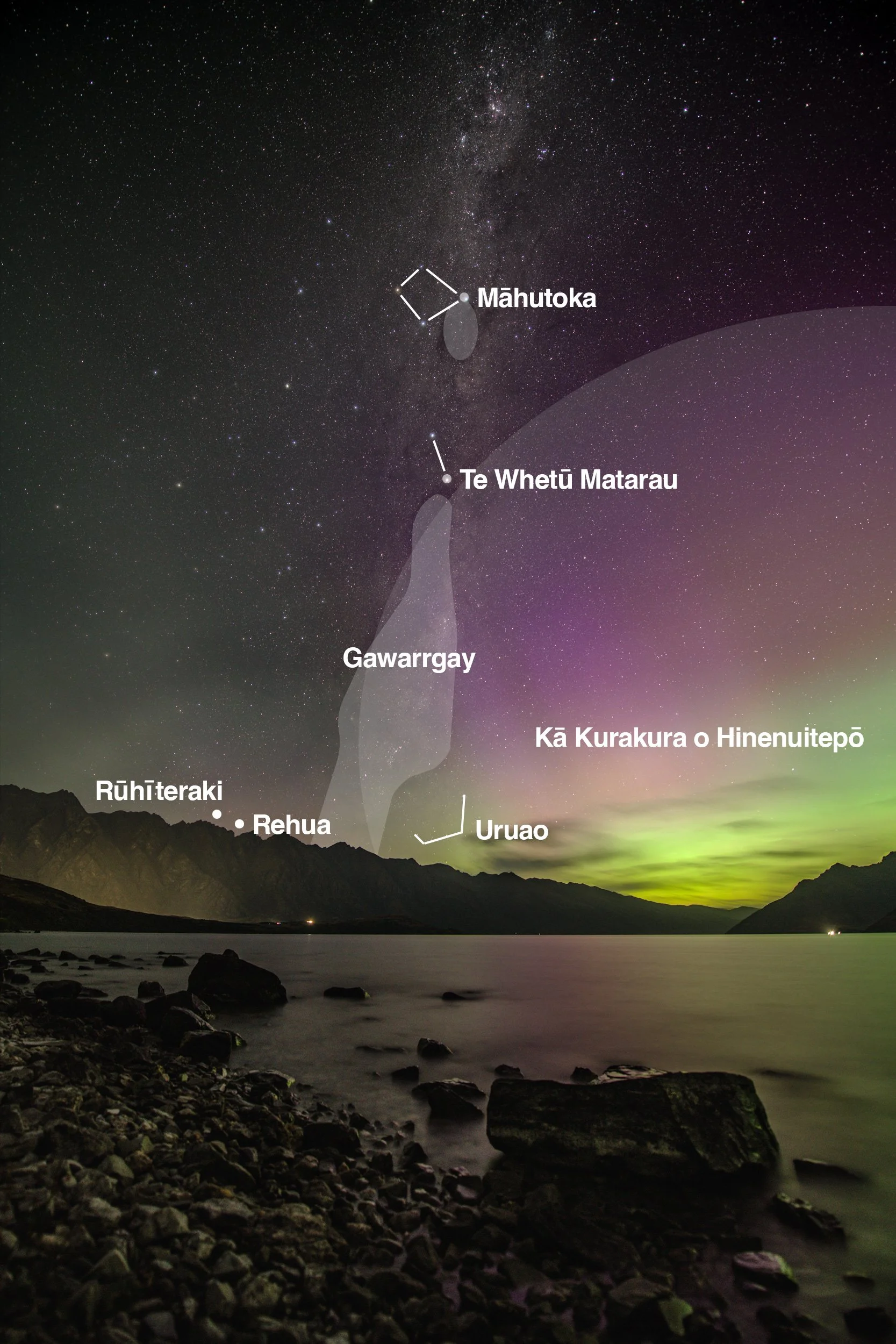
Gawarrgay—the Gamilaraay name for the Celestial Emu—flying almost high enough to be standing atop Kawarau (The Remarkables). The Coalsack Nebula forms the emu's head, prominent high in the sky. Mahutoka (The Southern Cross), Pātara (the Magellanic Clouds), the green glow of the aurora still dancing on the horizon. This is the view from Te Nuku-o-Hakitekura at 3am, when time drifts and knowledge from ancient times comes through.
Protecting the Night Sky
You get lost under a dark night sky such as this. Time drifts. Knowledge from ancient times comes through. Cultures mix. We start to become one. A species that for millennia have learnt from the heavens. In recent times, some of us appear to be hell bent on removing our access to visually see these wonders from where we live.
This evening past, I have spent time in easy to access places. Often surrounded by way more people and street lights than I usually would be and it was still life changing. Just because we're able to see these sights now, doesn't mean we will forever more. Access to the night sky is fragile and it needs protecting. I'm one of the lucky ones. Not only do I spend countless of hours observing the night sky, I'm privileged to share it with others who don't see it often. I have first hand experience of the effect the night sky has on us. In our modern world, we need this now more than ever. This needs to be protected.