
The Owlie, Our First Letter
Kia ora, kā mihi nui ki a koe
Here is our first newsletter which we have decided to call ‘Owlie’ - we have had this prepared since Spring then last week on a Starry Night Adventure Simon was speaking to our manuhiri on the side of a mountain and two Little Owls came into the nightscape beside him calling to each other. We shall take that as a sign to send this out to our AuthenticAs friends.
We wish you a Meri Kirihimete with your whãnau and hope you enjoy a quiet read encouraging you to connect with nature wherever you may be and look up to those summer stars. If you are interested in booking a Daytime Tour with us either AuthenticAs Queenstown (3hrs) or AuthenticAs Top and Back (Glenorchy and beyond 6hrs) please use this code OWLIE25 for a 25% discount as we say farewell to 2025.
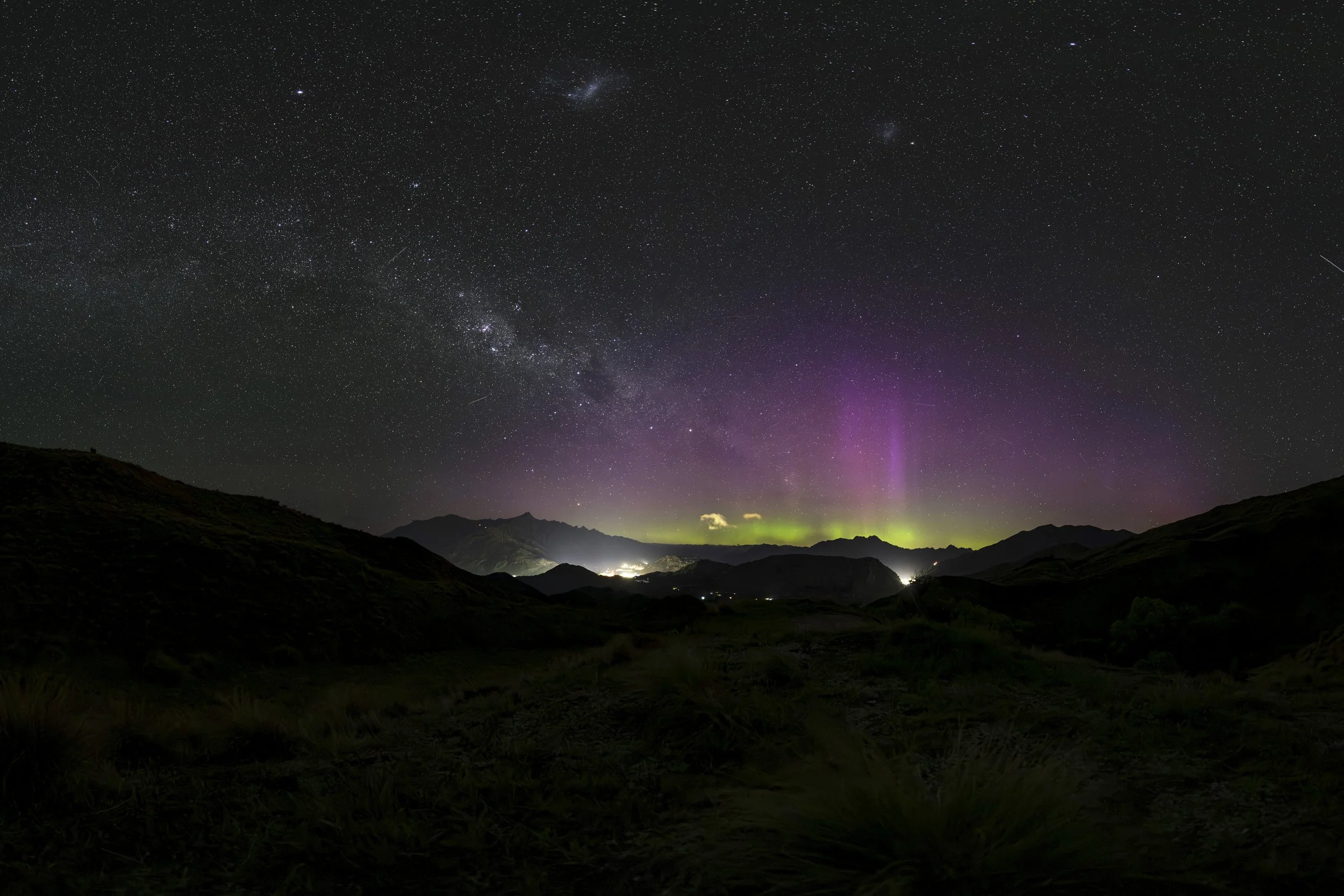
Raumati (Summer) has well and truly arrived. If you head out just after sunset you’ll be treated with some amazing skies. This is of course if you’re looking at the Southern Hemisphere Whetū (stars)
Māhutoka and Te Whetū Matarau are low to the horizon in the direction of Toka (South). This is a great time to take note of any landmarks they are above and notice how they move over the course of an hour or so, as Papatuānuku rotates beneath Rakinui.
Directly above, almost at the Zenith (that’s the point directly over your head) you’ll see kā Pātari (The Magellanic Clouds), our two closest galaxies. With them at such a high altitude, they look incredibly crisp and clear.
Turning our attention toward Whitika (East), this is where you’ll see Te Waka o Taimaranuku, an asterism spanning Canis Major, Orion and Taurus. This sits on the Celestial Equator, so you’ll be able to see this from the Northern Hemisphere too. It’s this waka that we observe in the morning time of Matariki. This is a great opportunity for you to familiarise yourself.
Hine Takarua (Sirius) is looking so incredibly bright, as she should being the brightest whetū. When you observe Pūtara (Betelgeuse in Orion) take note of how orange it looks, night to night the saturation and twinkling vary depending upon the atmosphere.
Finally in this asterism, Matariki (Pleiades), the hoof of Taurus the Bull. How many Whetū can you see with your naked eye?
For a more detailed overview of the Summer Night Sky have a read of the story we posted on our website.
Back to Owlie…..to explain, here's a little story of our resident Owl family who nest in the roof above our Authentic As studio here at home in Wharehuanui, Tāhuna (Dalefield, Queenstown).
Way back when, like going back right to the day we formed our little company AuthenticAs we had the most beautiful experience. On an uncharacteristically cold January afternoon, the both of us sat at the dining room table pulling together our thoughts for what AuthenticAs was to become, out of the corner of our eye we noticed something move quickly in the garden along the gravel path. It was one of those fleeting moments, even though you question if you actually saw anything at all.
We got up and looked around, and we saw the most adorable fledgling Ruru Nohinohi (Little Owl). Huddled up against the retaining wall looking very lost and really not sure what to do. It seems that the feeling of not being sure what to do was reflected in us. Obviously wild, how much do we interfere?
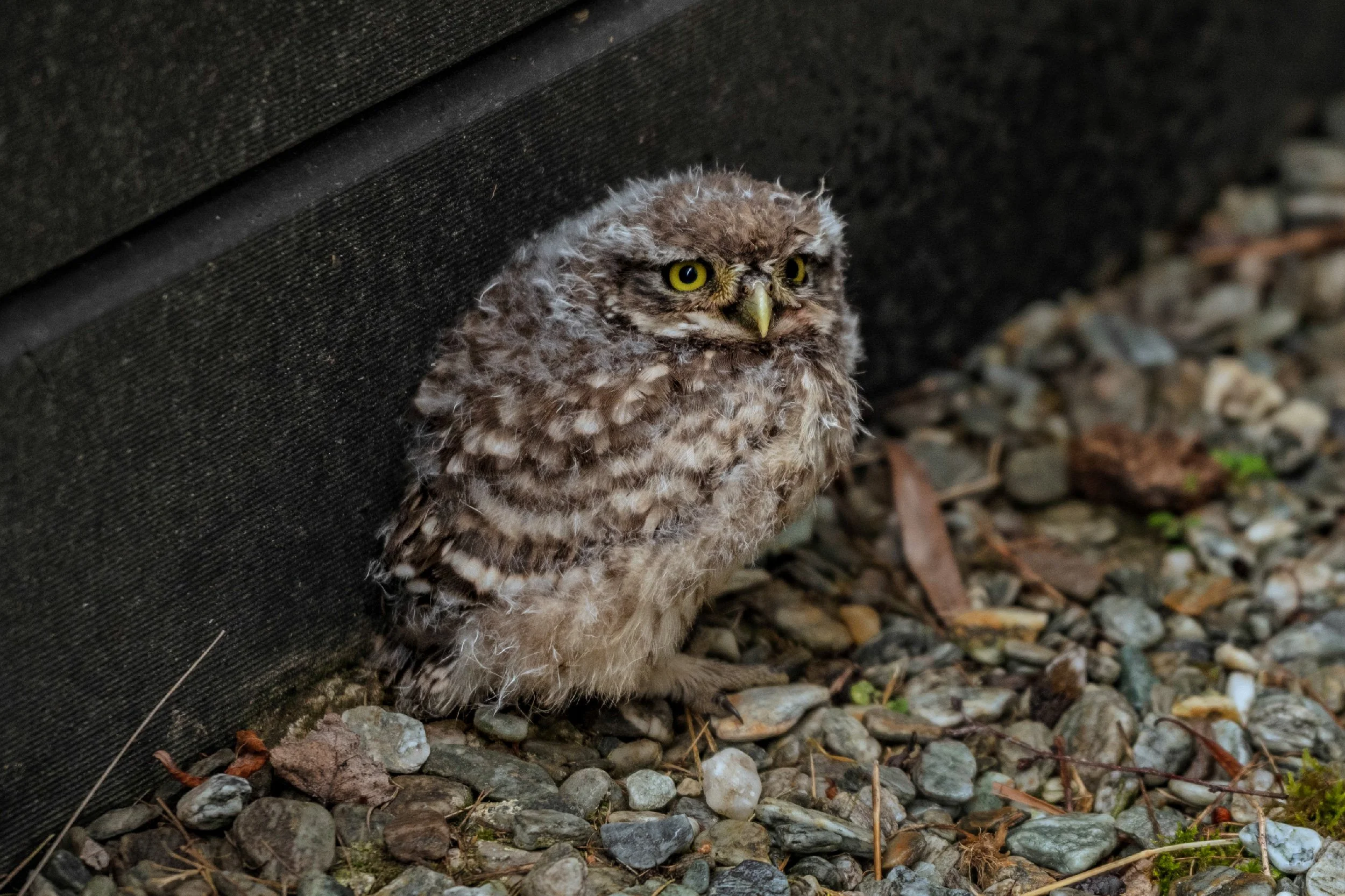
We kept our distance to see if a parent would come, an hour or so passed, we noticed Owlie didn’t really move and it got to a point that there was no way in the world we could leave them there overnight. It was getting colder, the rain falling and certainly not somewhere for this little one to be on their own. So we brought him carefully inside in a dark warm box and placed him by the fire. The only food we had that seemed to match an Owls taste was some turkey giblets. We offered these quietly in a dish. Lid down lights off. Shhhh.
As the morning came and it was time for us to venture north for a few days, we were a little nervous about what to do. We read of 30cm of snowfall at Cardrona skifield, without a doubt completely uncharacteristic for that time of year.
In the morning opening the banana box extremely carefully, we realised they’d made it through the night. Our offerings of food weren’t really to their taste, but the warmth and comfort of the nest and fire appeared to have done the trick. We set Owlie free into a pile of twigs in our woods with his snack. Hoping he would make it through.
We saw this little one hop out, take a few excited steps and then fly up and away into the air. What a moment. Knowing what we know now, we consider this to be one of the most beautiful tohu (a sign from te taiao - the environment) that we’ve ever been shown.
As the years have rolled by, we’ve been ever so lucky that Owlie, along with the rest of their whanau have stuck around. We hear them calling to each other during the day and night, more prolifically around day break and sunset. A beautiful low and high call, easily replicated. On a summer evening we can sit outside and call to them as they call back, and with enough patience they do fly by and say hello.
A screeching from within the walls of Simon’s studio in October and November, along with a fair few clunks and appearances have made us so incredibly happy to realise the cavity under the roof and the wall has provided shelter and nesting space to raise more owlets.
As we’ve drunk our morning coffee we’ve looked out of the window and seen Mr. and Mrs. Owlie looking at us as they perch in the Poplar trees. The fence posts provide the perfect perch, and once you know what to look for there’s a very distinctive shape that flies through the sky to know that Owlie’s about.
As we spend our time observing what’s going on around us, we do our best to record the comings and goings in te taiao. We’re not always sure where to put our observations. Sometimes a post on Instagram or Facebook works well, but it’s not really where it should live.
We find ourselves at the point where we want to publish ‘The Owlie’. A broadcast of what we observe, during the day and night, adventuring with clients or just hanging out at home nurturing our whenua. We’re sure we’ll bring news from outside of our immediate world now and again, but mostly this is going to be our way of recording, apparently in short form, the tohu we observe and what it means to us.
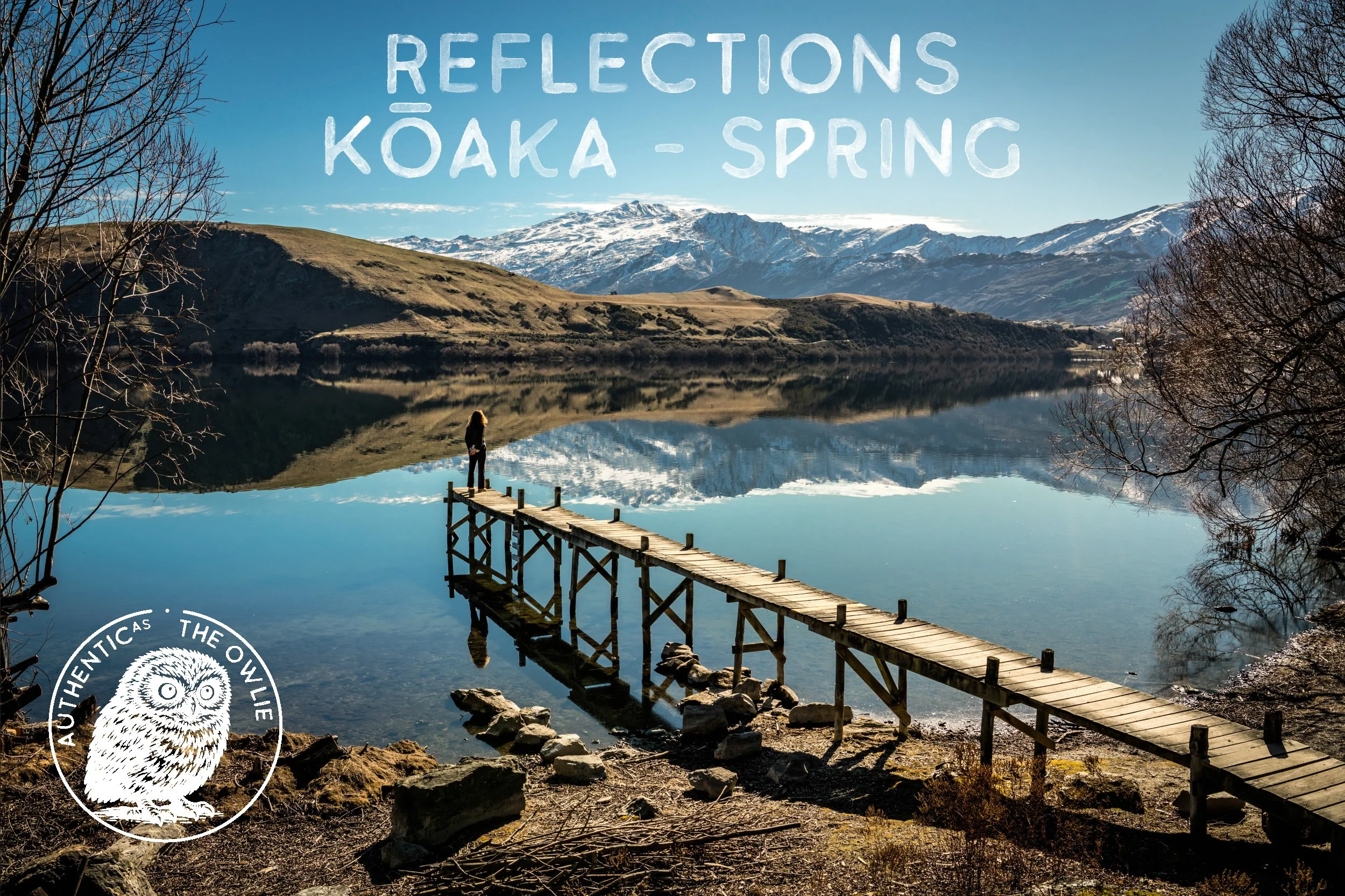
This season is well and truly upon us, we’re already halfway through the lunar year and what a wild ride it’s been this year. Takurua (winter) was incredibly interesting, almost no snowfall until Te Whā o Mahuru (the fourth month) and then it seemed to do little else but snow.
Te Rima o Kōpū saw life popping up all around us. Looking for tohu, we noticed nahonaho (midges) around the harakeke next to Whakatipu wai Māori, and then it took another 4 weeks for them to appear at home, about 150m higher in altitude.
The ducklings seemed to be a little late this year and not quite so plentiful, yet.
Te Ika Roa - The Milky Way, has dropped beautifully towards tomokaka (West) just after sunset, making astroportraits with our clients and absolute breeze.
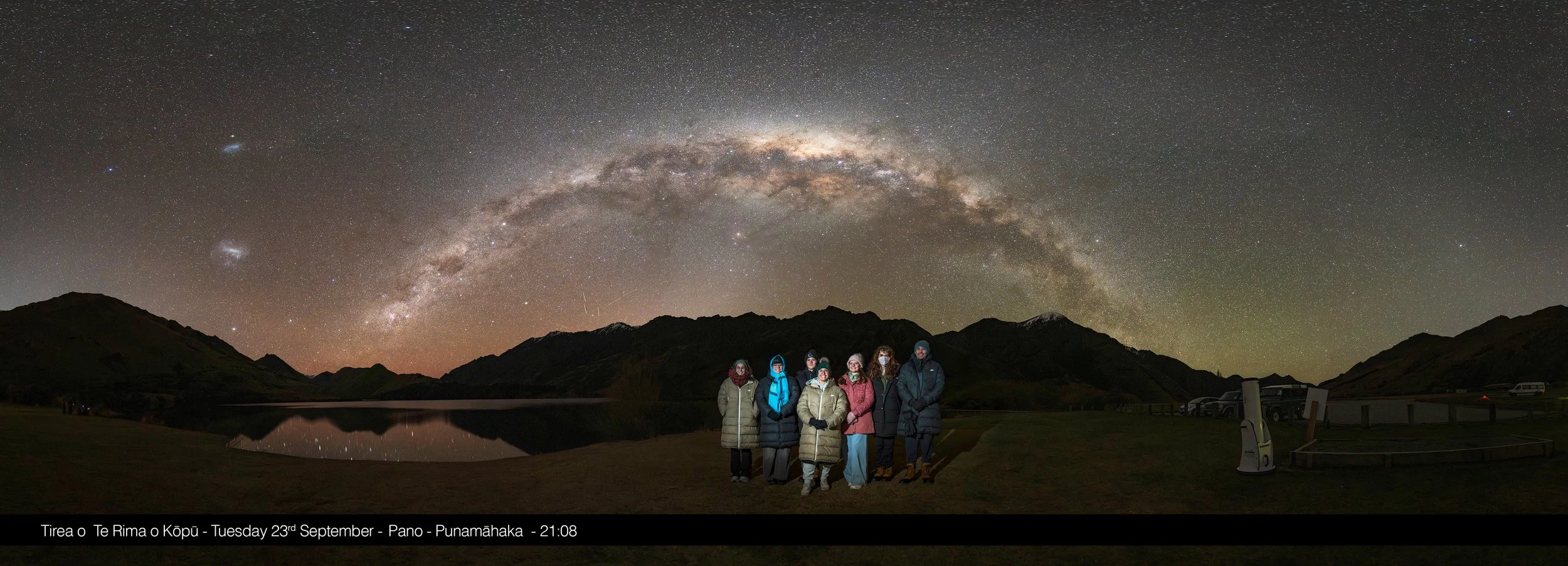
As for Kā Whetū, their presentation has changed. In the lower 20°, the colour twinkles we’ve noticed all winter are weakening, and as a result early morning frosts are all but gone. As Rehua sets, Hine Takurua, Puaka, Pūtara, Tautoru, Taumata Kuku and Matariki are rising during our later Starry Night Adventures. The heavens show us there is a change of season upon us.
Tāwhirimatea (the ancestor of the wind) has come to visit. Something must have riled him because he’s made his presence known in a way that we haven’t observed often at all, and the rain and the clouds.
For our day time manhuri this has allowed us incredible vistas, as much as we love a blue sky day, you really can’t beat the majestic vistas that a moody atmosphere create here in the Southern Lakes.
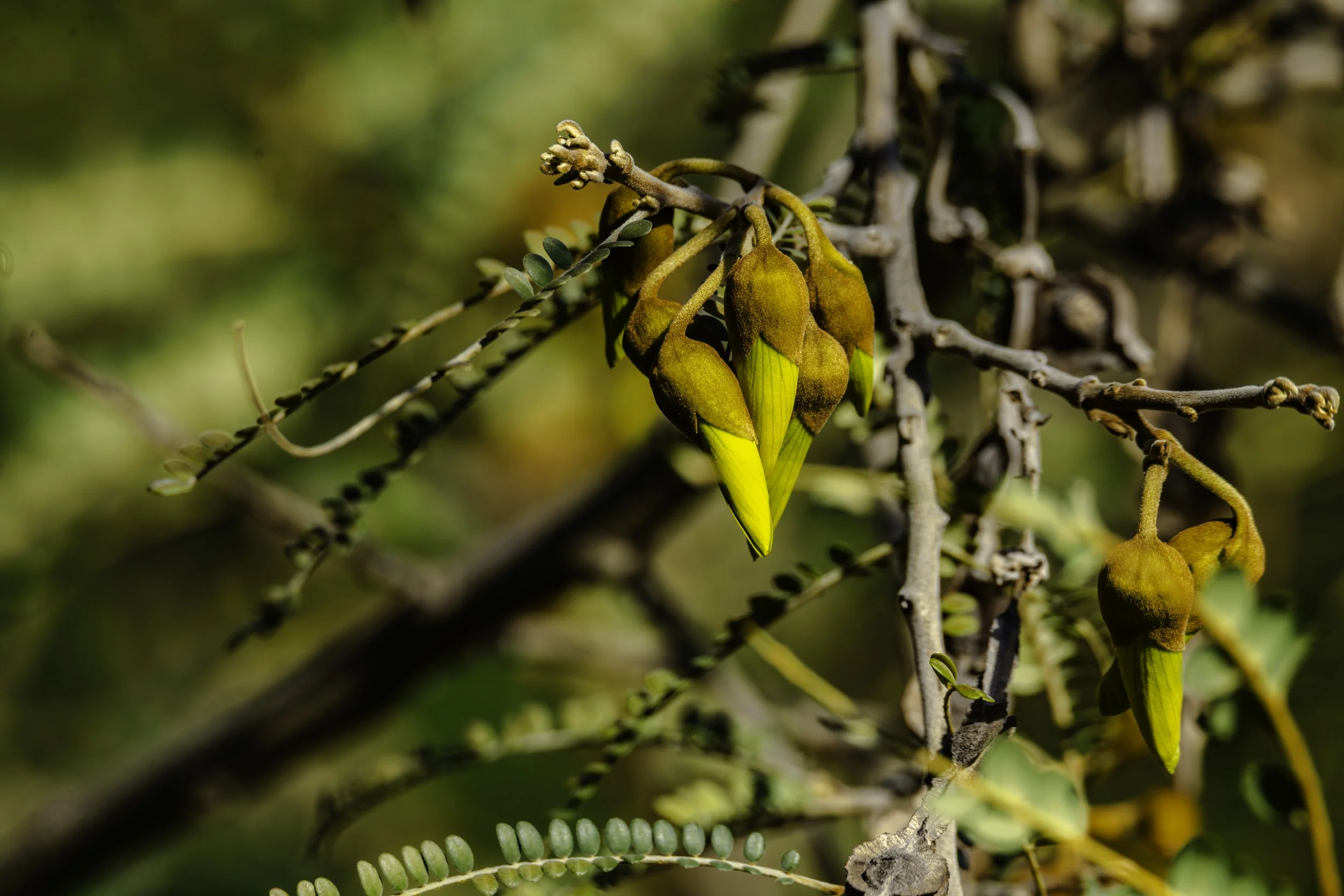
We’ve watched our Kōwhai really come to life. The leaves dropped, seedpods appeared, then the buds and eventually the beautiful golden yellow flowers appeared. Then came the Tui. They’ve been flying around, drinking the nectar from the poplar buds, investigating the Silver Birch, all the while waiting for their favourite nectar to appear on the menu. What an absolute treat is is to hear them celebrate the favourite of all feasts.
With the wild weather continuing, we’ve got seedlings inside the greenhouse, watering them and caring for them as we prepare the ground outside. Our dream is to continue Simon's work of community planting in the Whakatipu now with our manuhiri rather than as he used to with local schoolchildren as the Enviroschool Educator. As part of our environmental offsetting, we’ve taken seeds from the kowhai we have been growing at home and been patiently nurturing seedlings, which we’re hoping to plant sometime in 2026 once they’re ready.
As we close this first Owlie, we want to say thank you for taking the time to read, to pause, and to notice alongside us. This newsletter is not about announcements or urgency, but about paying attention to what is unfolding in te taiao (the environment) and what those moments might quietly be teaching us. We hope Owlie becomes something you return to now and again, a place to slow down, to reflect, and to feel a little more connected to the whenua (land) beneath your feet and the kā whetū (the stars )above your head at night. Until next time, look after yourselves, look after each other, and keep looking up.
Meri Kirihimete, mā te wā
Emma & Simon